






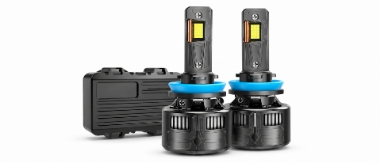
Bombillas LED are the best all-round choice for most drivers today: they switch on instantly, use less power than halogen, and last far longer. Halogen is the cheapest option but dimmer and shorter-lived, while HID is bright but needs a ballast, takes time to warm up, and costs more to install. The right choice depends on your headlight housing, bulb socket, and local regulations — always confirm fitment before ordering.
Quick comparison
| Type | Brightness | Lifespan | Power use | Start-up | Coste |
|---|---|---|---|---|---|
| LED | High | Long | Bajo | Instant | Mid-range |
| Halogeno | Moderate | Corto | Más alto | Instant | Más bajo |
| HID (xenon) | High | Medio | Medio | Slow warm-up | Más alto, plus ballast |
LED: instant, efficient, long-lived
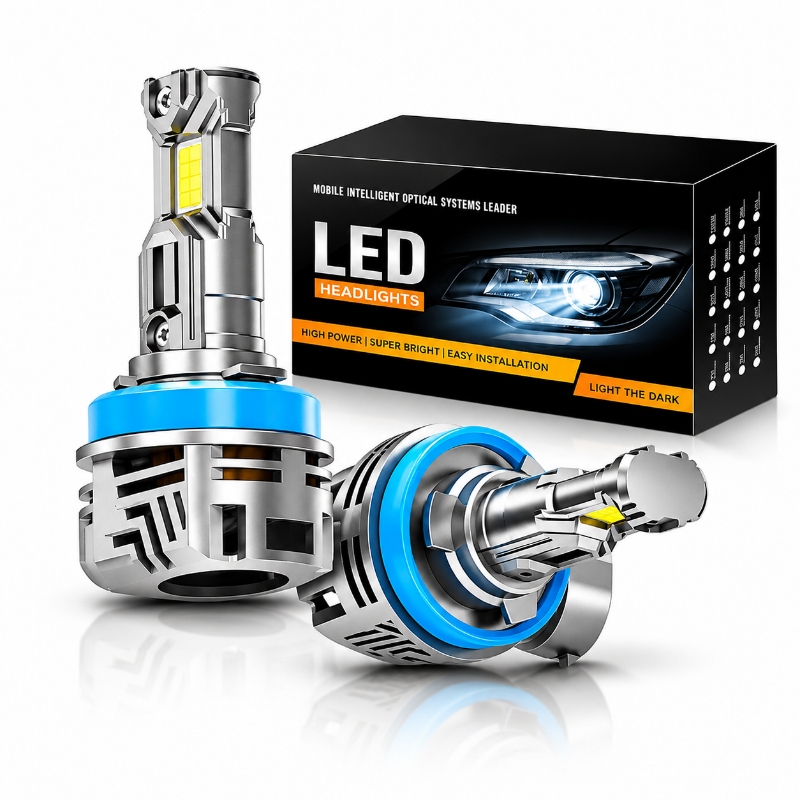
An LED bulb produces light from a semiconductor chip, so it reaches full brightness the moment you switch it on. It draws less current than a halogen bulb of similar output and, with adequate cooling, typically outlasts both alternatives by a wide margin. The trade-off is heat management: the chip itself runs cool at the front, but heat builds up at the base, so a good LED bulb needs a heatsink or fan.
Halogeno: cheap and simple
Halogen is the oldest technology of the three and still the cheapest to buy and replace. It works in almost any reflector housing designed for it, with no extra electronics. Its weaknesses are lower brightness, higher power draw, and a shorter life — the filament degrades and the light gradually yellows. For an older car on a tight budget, halogen remains a reasonable choice.
HID: bright, but needs a ballast
HID (xenon) bulbs create light from an electric arc in a gas-filled capsule. They are bright and efficient, but they need a ballast to ignite and stabilise the arc, and they take several seconds to reach full brightness. A failed ballast is a separate part to diagnose and replace. HID also demands a projector housing or a proper retrofit — fitted into a plain halogen reflector, it scatters light and blinds oncoming drivers.
Which should you choose?
- For a daily driver, easy upgrade: LED, if your housing and socket allow it.
- For the lowest upfront cost: halogen.
- For maximum brightness in a projector housing: HID, with a matched ballast.
- In every case: confirm the bulb socket (H1, H4, H7, H11, 9005, 9006 and others), check whether your car needs a CANbus decoder, and confirm that the upgrade is legal for road use in your market.
Preguntas frecuentes
Can I put LED bulbs in halogen headlights?
It depends on the housing. LED bulbs work best in projector housings or housings designed for them. In a halogen reflector, a poorly matched LED can scatter light and fail a roadworthiness check. Check the housing type and local rules first.
Do LED headlights need a fan?
Most do. The LED chip generates heat at its base, and a fan or large heatsink keeps it within its working temperature. A bulb that runs too hot dims early and fails sooner.
Are HID headlights better than LED?
Not in most cases today. HID is bright, but LED matches it on brightness, starts instantly, uses less power, and needs no ballast. HID still makes sense where a car was built for it.